
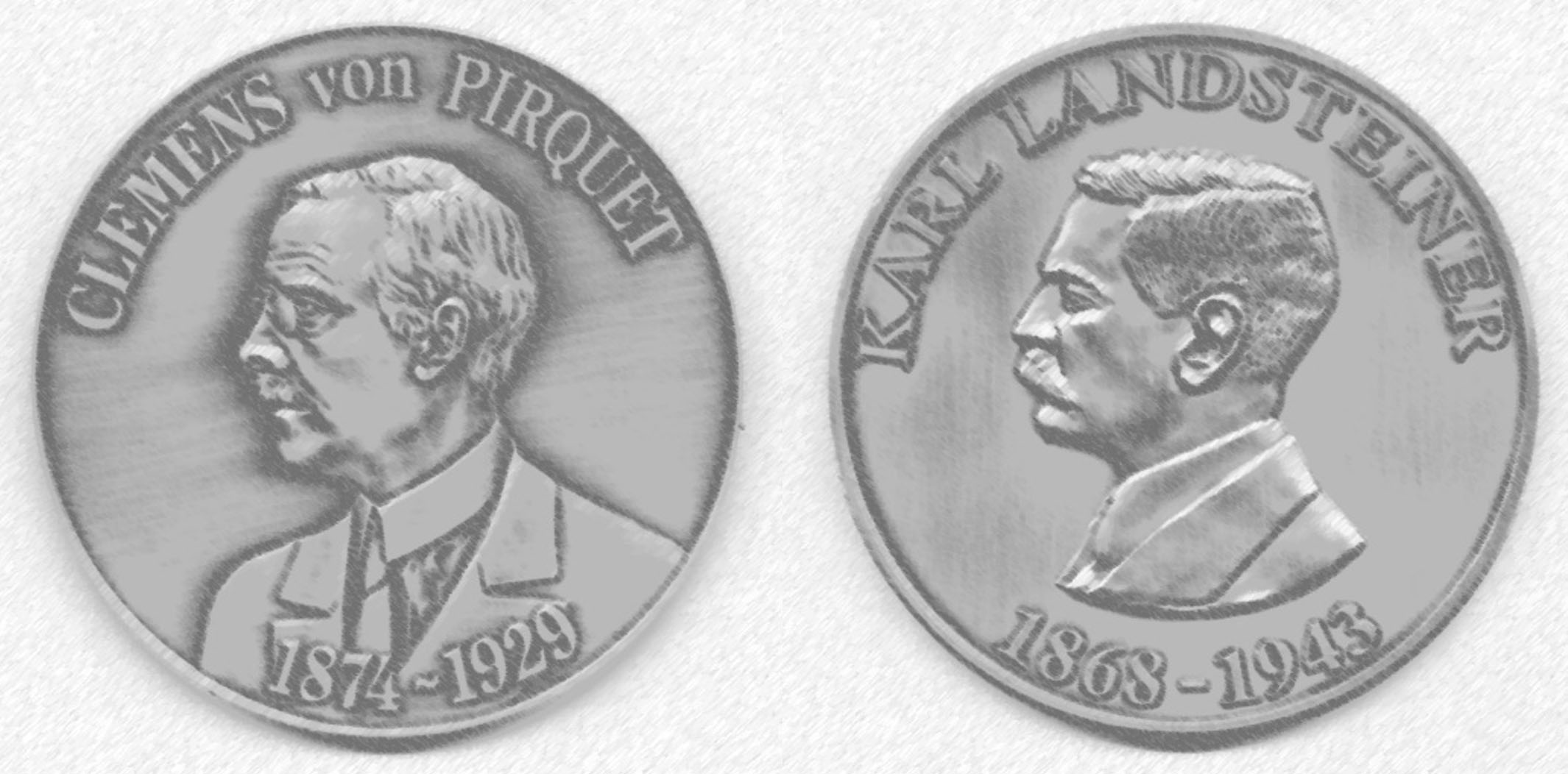
It is our great pleasure to announce the recipients of the 2026 ÖGAI Clemens von Pirquet and Karl Landsteiner Medals. These honors recognize outstanding scientists who have made important contributions in the field allergology and immunology, respectively, and have a closer connection to the ÖGAI and its members.
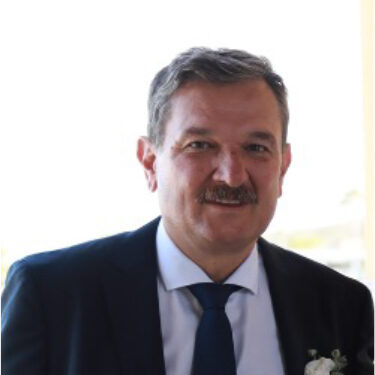
Cezmi Akdis
Clemens von Pirquet Medal
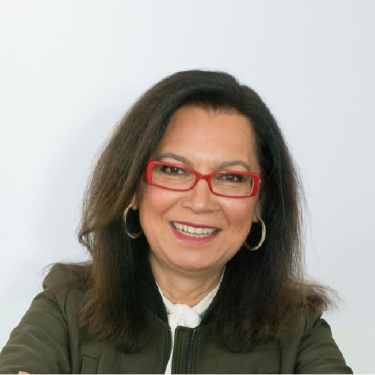
Mübececel Akdis
Karl Landsteiner Medal
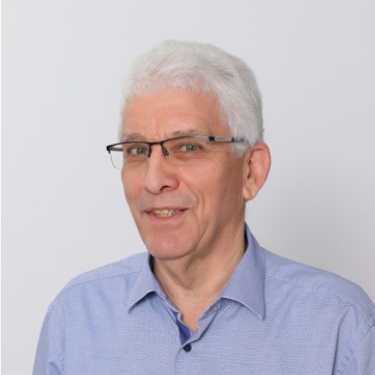
Meinrad Busslinger
Karl Landsteiner Medal
Prof. Cezmi Akdis – Clemens von Pirquet Medal 2026
Director, Swiss Institute of Allergy and Asthma Research, University Zurich
Web: www.siaf.uzh.ch; www.epithelialbarriertheory.com
Biosketch
Prof. Cezmi Akdis is the director of the Swiss Institute of Allergy and Asthma Research (SIAF) in Davos and Professor in Zurich University Medical Faculty. He has honorary professorships from Beijign Cantional University Tongren Hospital (China), Wuhan University (China), Zhejiang University (Hangzhou, China) Bursa Uludag University (Turkey), Peking University, China and Harvard University (USA). He is a Senate Member of the Swiss Academy of Medical Sciences.
Cezmi Akdis has published more than 800 peer-reviewed articles. His h-index is 173 (Scholar one) 138 (Web of Science). Cezmi Akdis acted as the President of the European Academy of Allergy & Clinical Immunology (20’000 members) between 2011-2013. He was the editor of Global Atlases of Allergy, Asthma I-II, Chronic Rhinosinusitis and Allergic Rhinitis, Planetary Health, and Co-Editor of Pediatric Allergy. He was the founder and organizer of the World Immune Regulation Meetings, Davos I-XX. He was the Editor-in-Chief of Journal of Allergy and Clinical Immunology and is currently the Editor-in-Chief of the Allergy journal.
Cezmi Akdis’s current research is the continuation of his epithelial barrier theory development of allergic and autoimmune diseases. He has recently identified 80 diseases linked to Epithelial Barrier Damage and Microbial Dysbiosis overall are responsible for more than 2 billion patients. Cezmi Akdis is currently focused on development of AI solutions to better understand the mechanisms of diseases linked to epithelial barrier defect caused by environmental changes. His major contributions include immune tolerance to allergens, understanding of Type 2 immunity, discovery or first time demonstration of many human immune system cells and cell subsets and many articles at the early stages of Covid including the first human to human infection paper.
Prof. Mübeccel Akdis – Karl Landsteiner Medal 2026
Head of Immune Regulation
Swiss Institute of Allergy and Asthma Research (SIAF), Davos, Switzerland
Web: www.siaf.uzh.ch
Biosketch
Dr. Mübeccel Akdis is working in the Swiss Institute of Allergy and Asthma Research (SIAF), University Zurich since 1995 and received her PhD in Immunology. She worked as a postdoctoral scientist and became a group leader at SIAF, where she has established her own research group in 2003. Dr Akdis made her habilitation in Zurich University Medical Faculty on Experimental Immunology in 2005 and became a professor in 2016. She has published 389 peer-reviewed articles, sum of times cited: 33’143 and her h-index: 99 (135- Google Scholar).
She has received honorary professorships from Beijign Cantional University Tongren Hospital (China), Wuhan University (China), Zhejiang University (Hangzhou, China), Bursa Uludag University (Turkey), and Harvard University (USA). She has received research grants and collaborative grants from the Swiss National Foundation, European Union (6 consortium grants) and Stanford University Sean Parker Seed Grant. She received numerous awards, including International Distinguished Fellow Award of the American College of Allergy, Asthma & Immunology (ACAAI. European Academy of Allergy and Clinical Immunology EAACI, Paul Ehrlich Award for Experimental Research, Federation of European Biochemical Societies (FEBS) Datta Lecture and Medal, Kanton Graubünden Scientific Recognition Award, Sedat Simavi and Bulent Eczacibasi Medical Science Awards. She is currently scientific program co-chair of the EAACI.
Her major contributions are on mechanisms of immune tolerance to allergens, viral infection responses of B cells, human B regulatory cells, mechanisms of allergen Immunotherapy, type 2 immune response, immune tolerance to food antigens, regulation and subsets of IgG4 memory B cells.
Prof. Meinrad Busslinger – Karl Landsteiner Medal 2026
Research Institute of Molecular Pathology (IMP), Vienna, Austria
Web: https://www.imp.ac.at/groups/meinrad-busslinger
Biosketch
Meinrad Busslinger studied biochemistry at the ETH Zürich and obtained a doctoral degree in molecular biology from the University of Zürich. Following postdoctoral studies at the MRC Institute Mill Hill, London, he became a group leader at the University of Zürich. In 1987, he followed Max Birnstiel as a Senior Group Leader to the newly founded IMP in Vienna. Busslinger is Director of Academic Affairs at the IMP, and since 2013 also Scientific Deputy Director of the institute. He is a Professor at the University of Vienna as well as a member of the Austrian Academy of Sciences and the European Molecular Biology Organization. He has published over 190 papers in peer-reviewed journals, served on different scientific advisory boards as well as on editorial boards of several scientific journals.
Meinrad Busslinger is a leading molecular immunologist recognized for his pioneering work on the transcriptional regulation of B-cell development. He discovered and characterized the transcription factor Pax5, demonstrating through mouse gene-inactivation studies that it is essential for B-lineage commitment, mature B-cell formation, and antibody diversity. His research revealed that Pax5 controls VH-DJH recombination by regulating chromatin loop extrusion across the Igh locus through repression of the cohesin-release factor Wapl. This mechanism enables broad antibody repertoire formation. The Busslinger group also identified Pax5 as a tumor suppressor and clarified its role in B-cell acute lymphoblastic leukemia using mouse models of human PAX5 translocations. More recently, they showed that PAX5 mutations can contribute to autism spectrum disorder. In addition, his group defined key functions of Ebf1, E2A, Bhlhe41, Blimp1, and Ikaros in B-cell development, plasma-cell differentiation, and autoimmunity.
Meinrad Busslinger received two ERC Advanced Grants and was awarded the Wittgenstein prize of the Austrian Government in 2001, the Virchow Medal by the University of Würzburg in 2010, the Prize of the City of Vienna for Natural Sciences in 2020, the Silver Medal for Meritorious Service to the Province of Vienna and an honorary membership of the Swiss Society for Allergology and Immunology in 2015.